

This Old Find: The Oldest Pharmacy in Rome
Apothecary bottles, ancient Italian labels, oh my!

Last year, Dan and I went to Rome for my first art show. I can’t even believe I get to write that. Even better, the art show was hilarious, but more on that another time. I’m an off-the-beaten-path kind of traveler that likes to fly by the seat of her pants, but with a strong dose of research beforehand. I don’t want to accidentally miss the hidden gems just because the thought of a scheduled vacation sends shivers down my spine! While waiting at the airport to board our flight to Rome, I did some research and discovered Rome’s oldest pharmacy, Spezieria di Santa Maria della Scala.
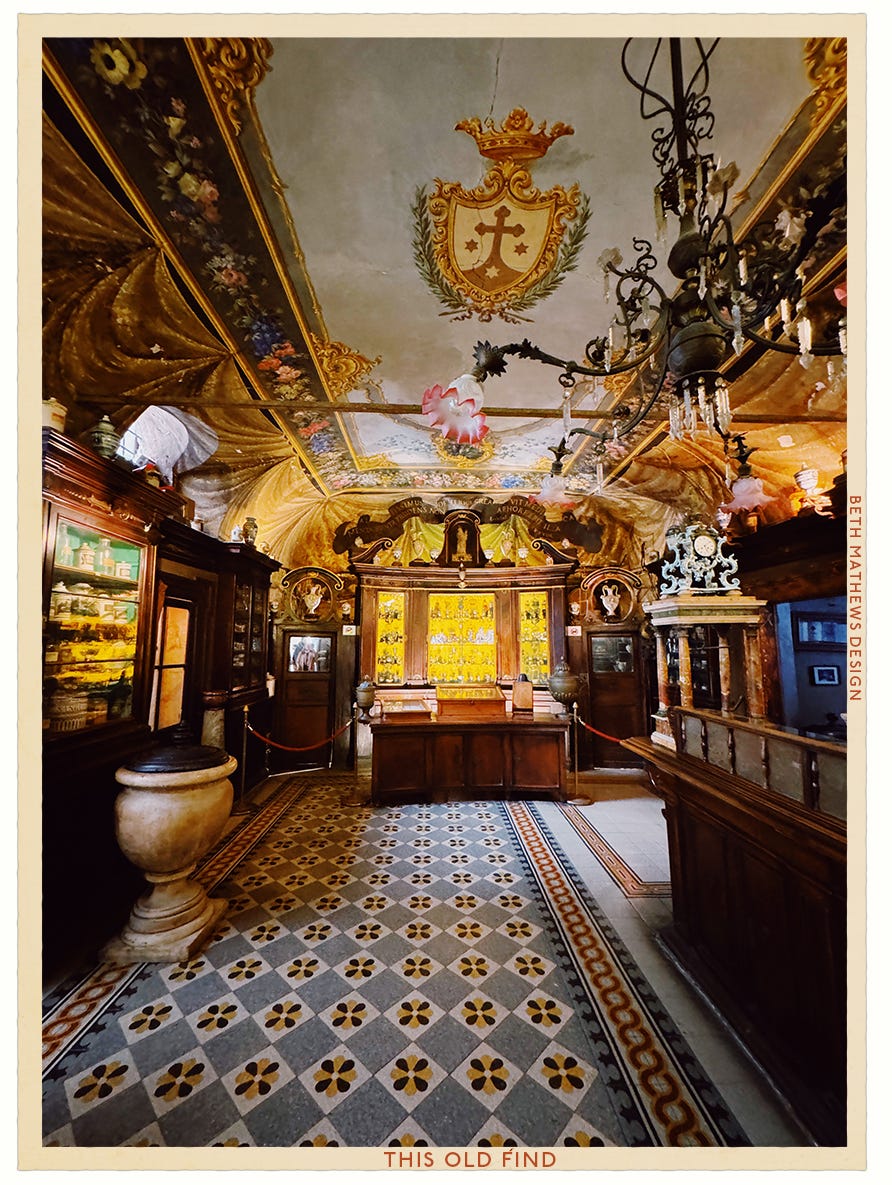
Founded by a group of friars in the 16th century, the Spezieria di Santa Maria della Scala was the pharmacy of the popes for centuries. These friars grew, prepared, and sold their medicines here until 1954. Within a forum tucked in the comment section, I found the pharmacy’s email address. I emailed a friar about touring this pharmacy from the 1500s (!! ), and he replied with an address to a convent, a time, and directions to a doorbell to ring. Thus began my own Nancy Drew adventure.
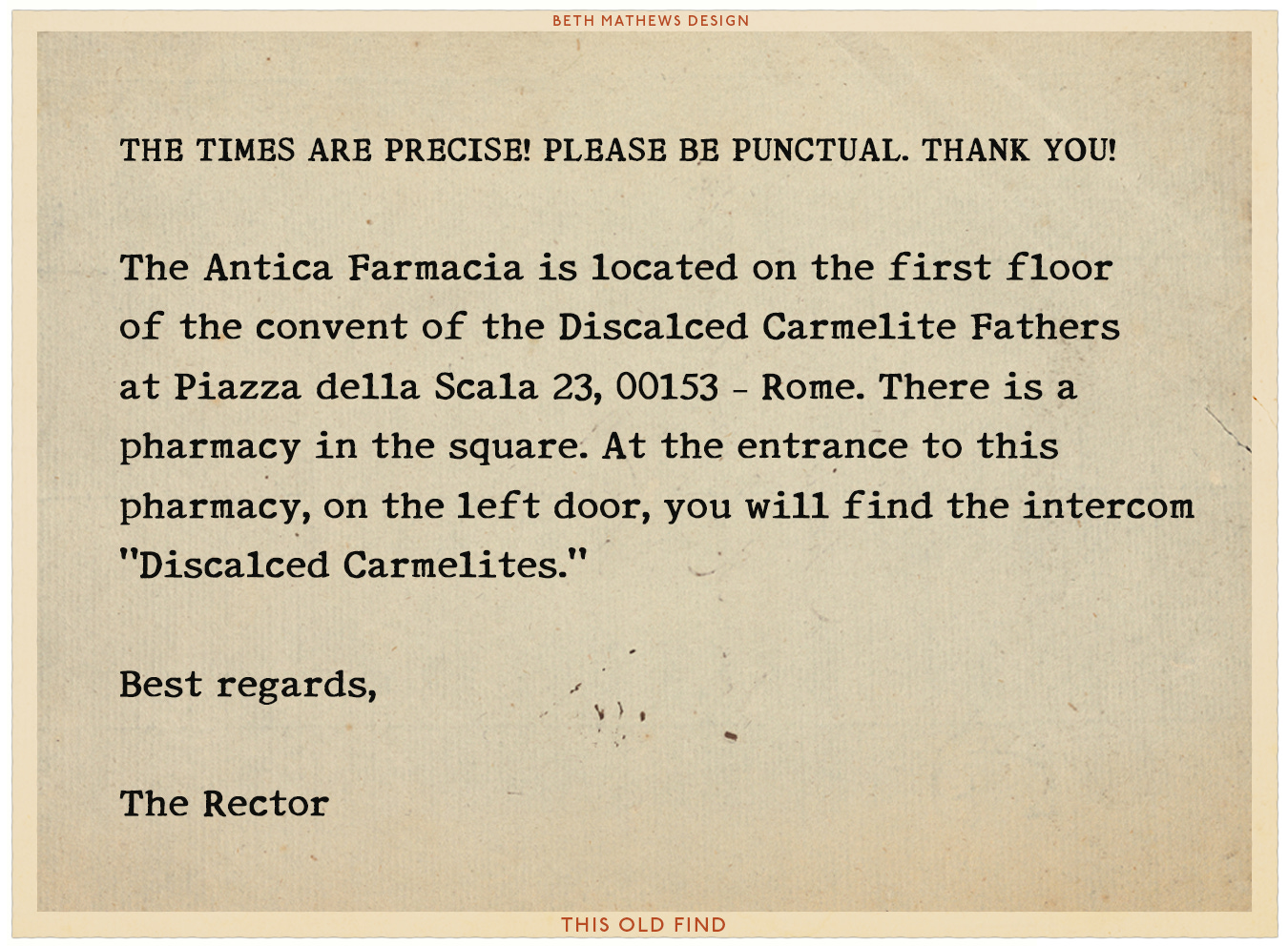
We arrived at 11:30 am sharp and located the intercom that actually said “Carmelitani Scalzi,” but I wasn’t about to correct someone who had signed their email to me “The Rector.”
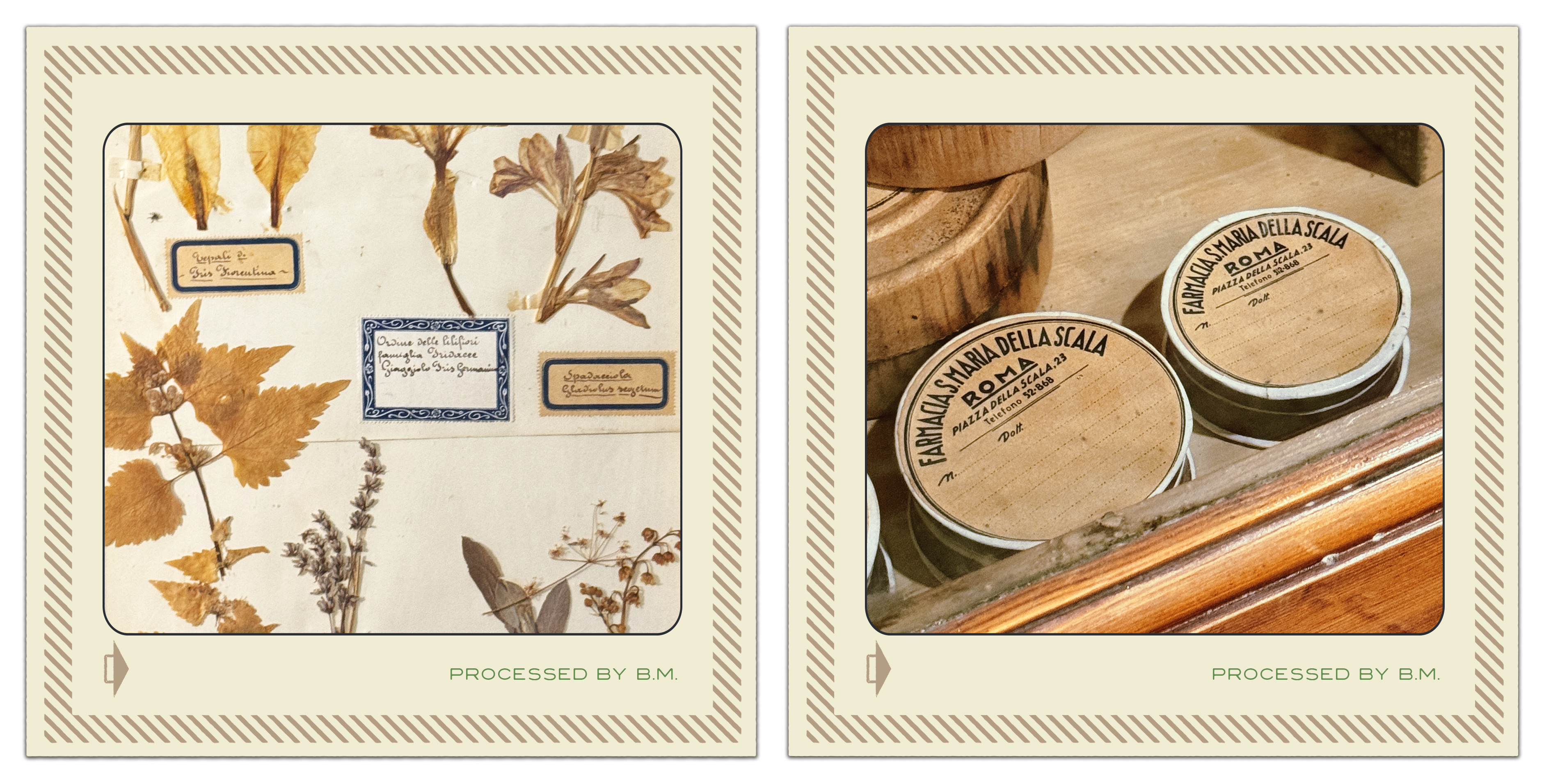
Crossing the threshold, you enter an ancient world full of mortars, vases, antique apothecary vials, salves, medicines, and medical instruments. Starting in the 1700s, the pharmacy became a place to study the properties of plants, archive preserved plant specimens, and catalogue medicines. The pharmacy, as it stands today, retains the 18th-century wooden cases, furniture, and ceiling frescos.
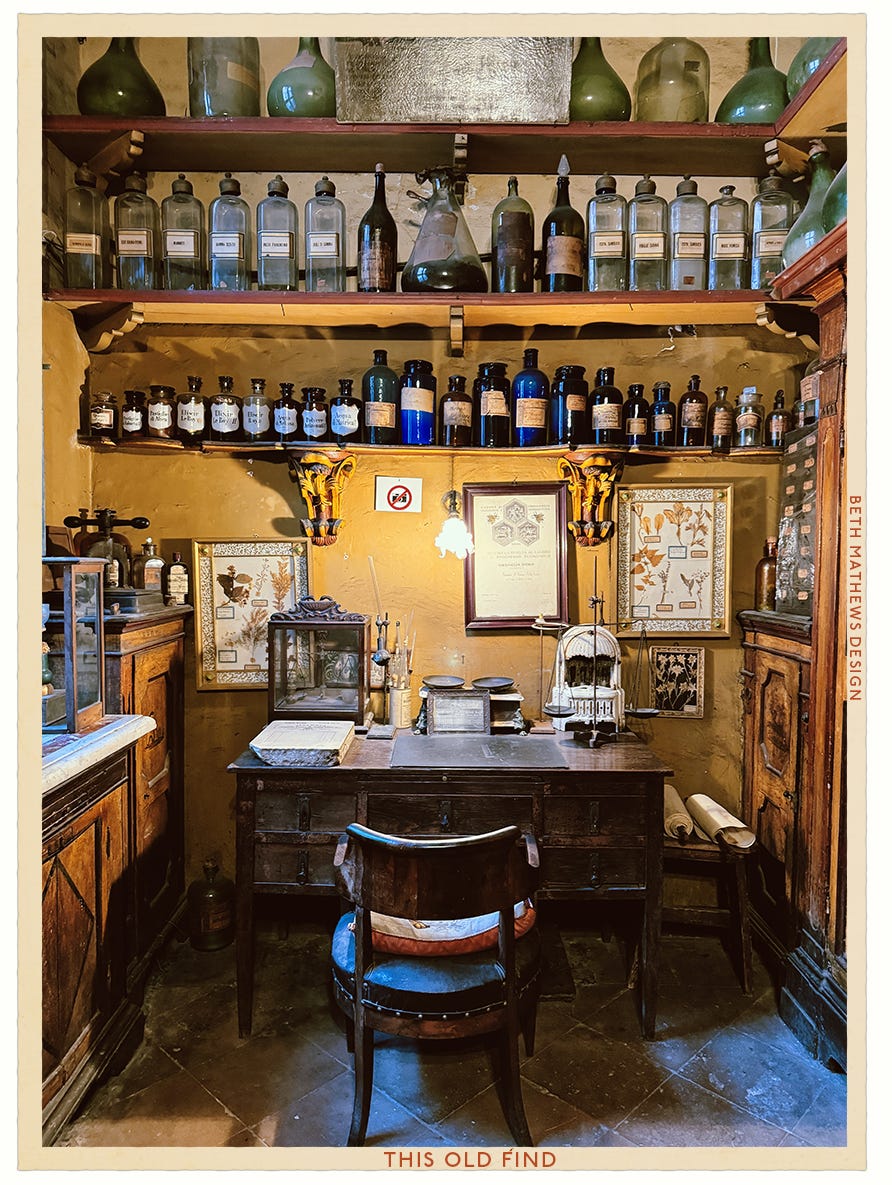
Seeing inside was a designer’s dream! Apothecary bottles from the 1500s to the 1950s adorned the walls. Ancient herbs, preserved in boxes with original labels for kings and queens, lined the shelves. Jars of concoctions, vials of viper venom, boxes of bones, and any other type of raw material were all for viewing.
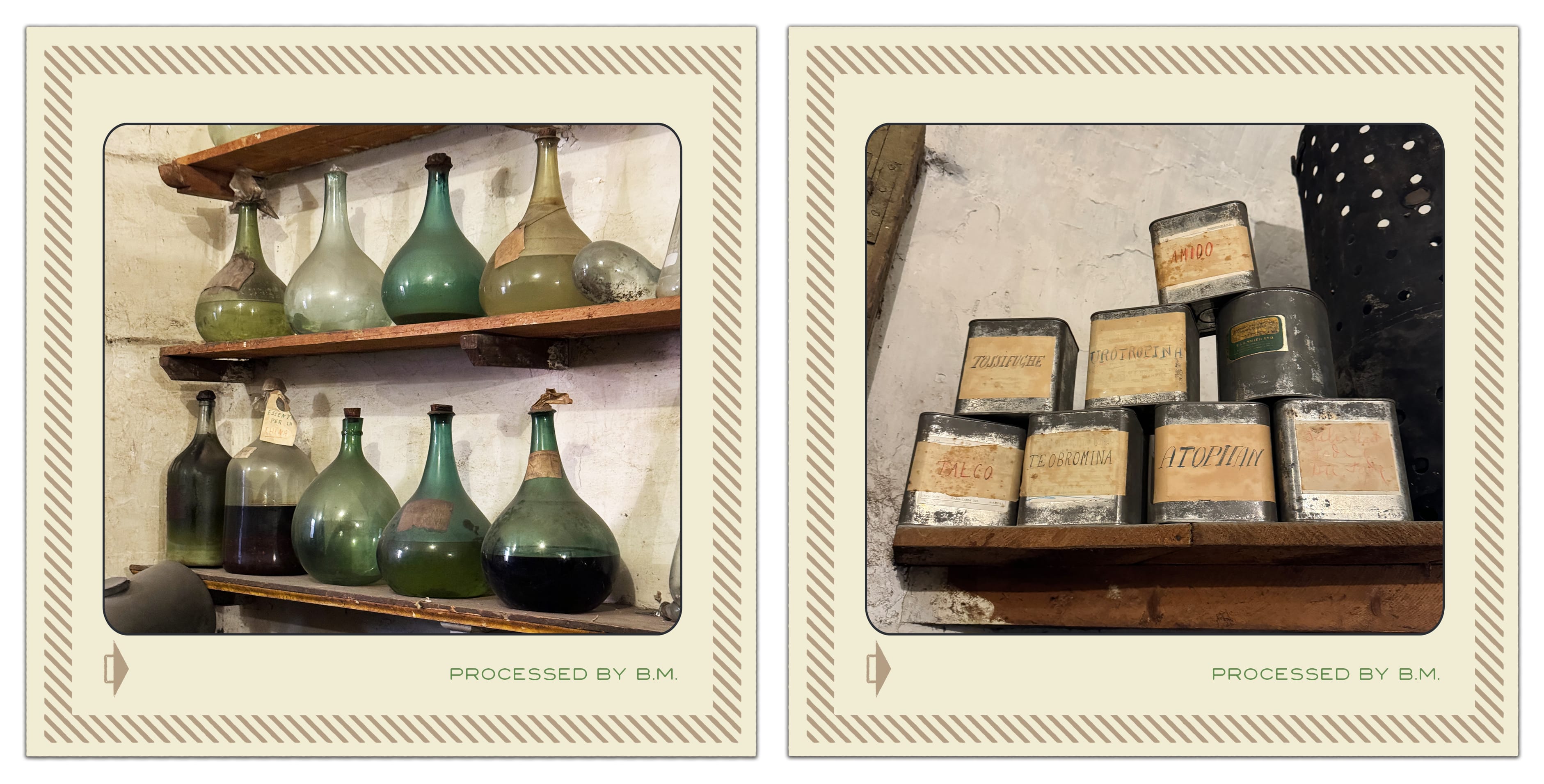
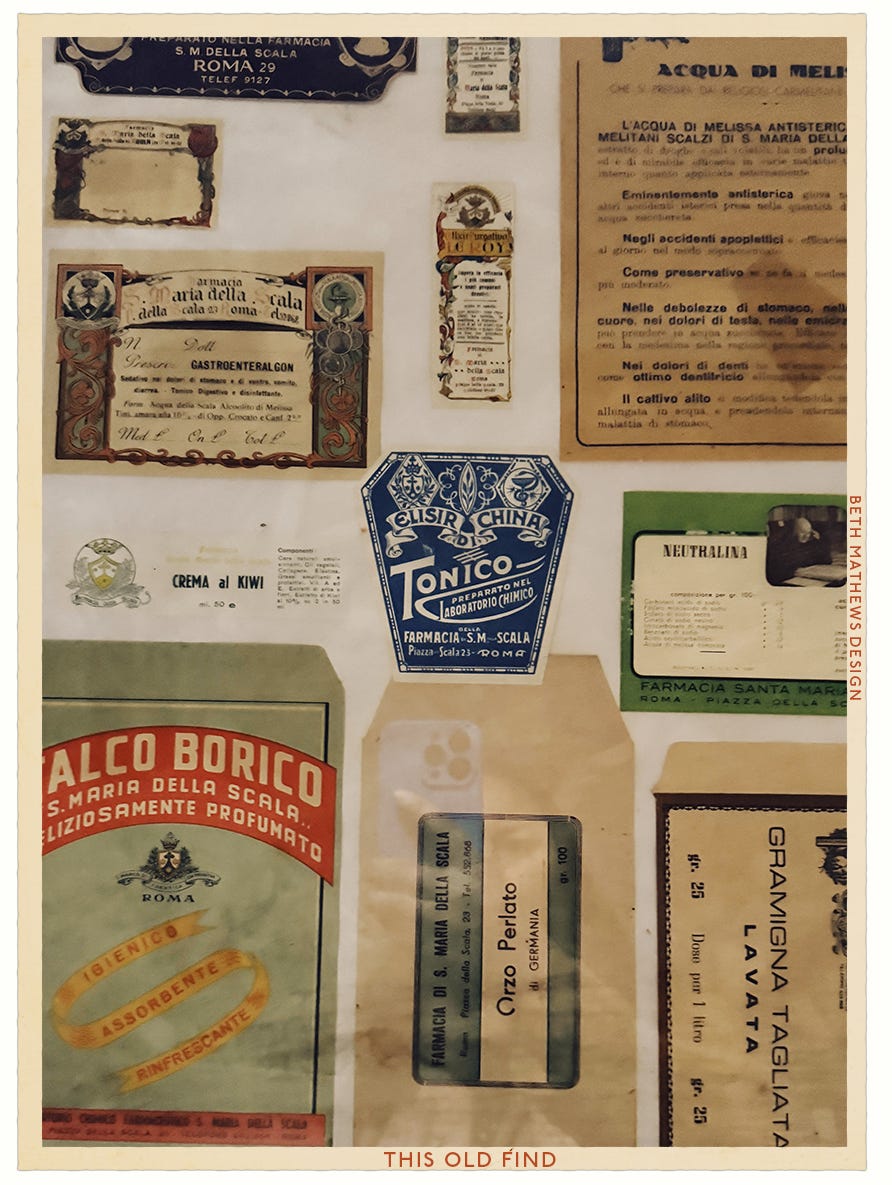
And of course, the up-close look at the packaging designs across the ages was fascinating. The “Talco Boric” seen on the bottom left was a form of baby powder for its time. And the “Crema al Kiwi”, Kiwi Cream, was used to fight skin aging. And the “Gramigna Tagliata Lavata”, also known as Couch Grass, was used to soothe the urinary tract and aid digestion.
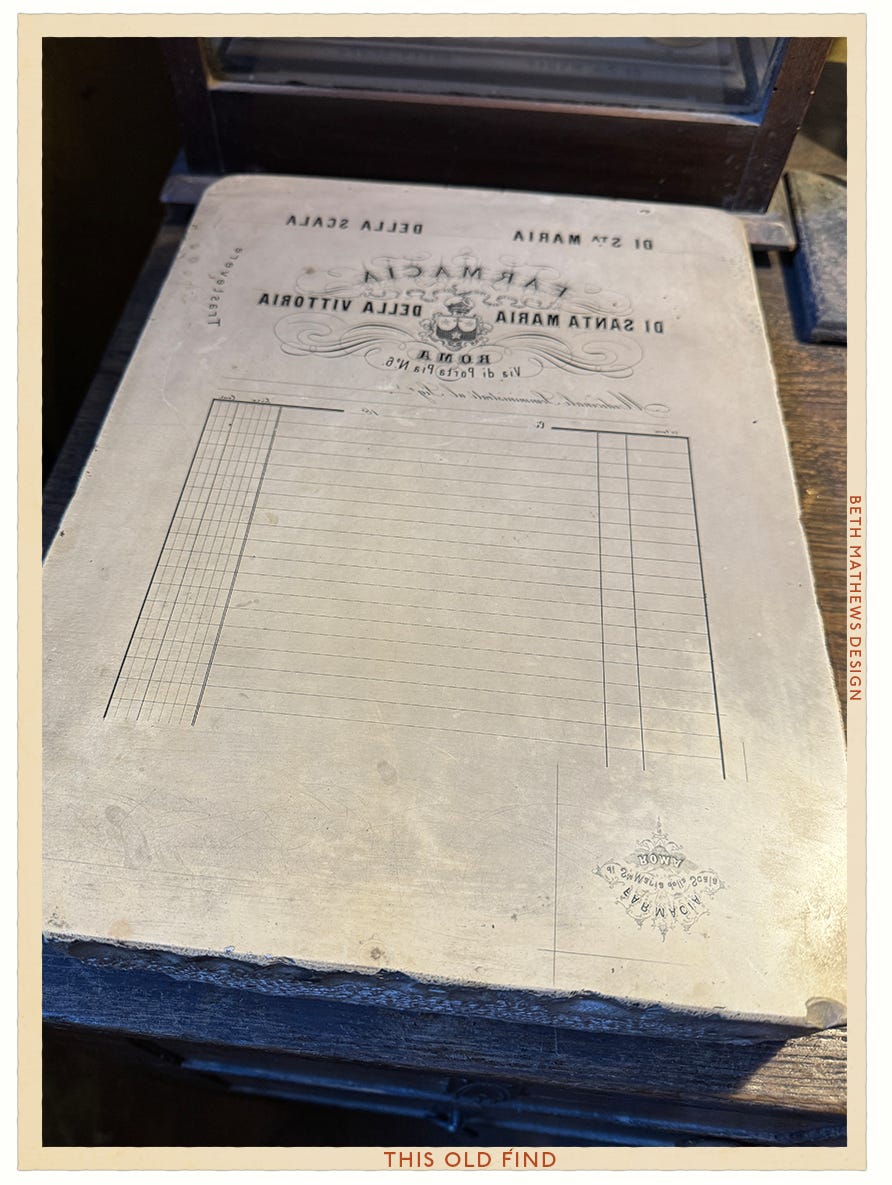
Among the relics was a lithography stone, a specially prepared slab of hard, fine-grained limestone traditionally sourced from Germany for use in printmaking during the 1700s. On display was a stone order form for the pharmacy, featuring its intricately engraved logos, address, and graph lines for the order details.
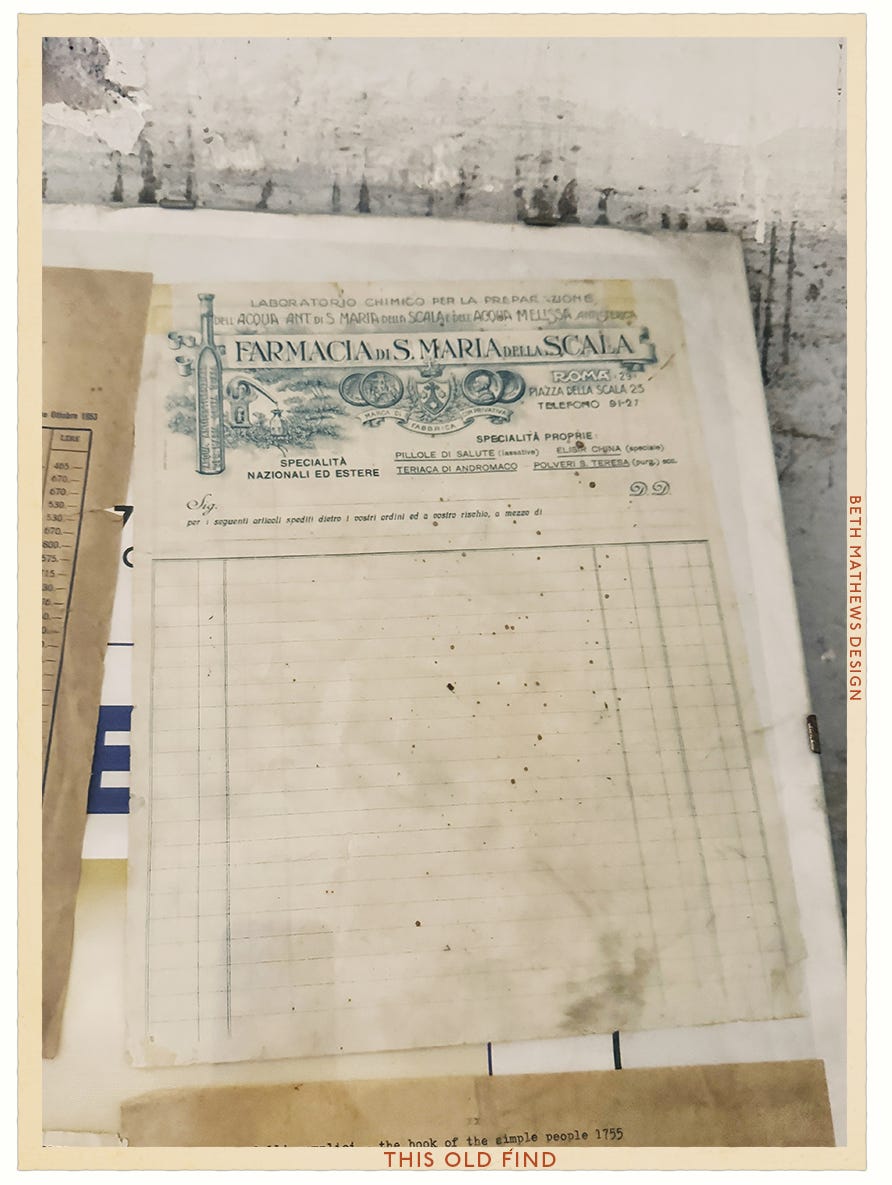
Also on display was a view of another lithographic print from the 1800s, from which you can tell the date because of the “TELEFONO” line underneath the address, which was introduced in Rome around the 1880s.
Go hog wild here, having a look at more of the interior space. I thought I was actually going to pass out. How can any of this be real? How can it be so perfectly preserved?
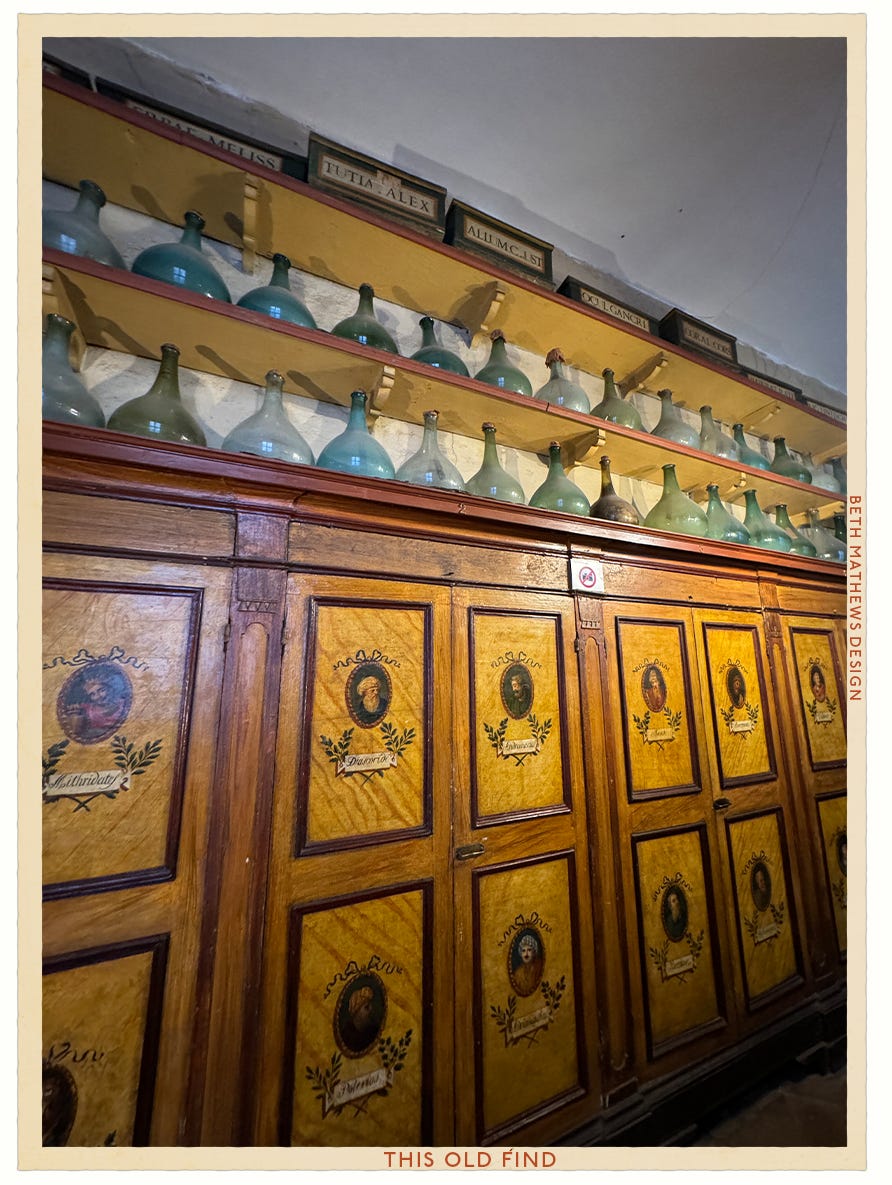
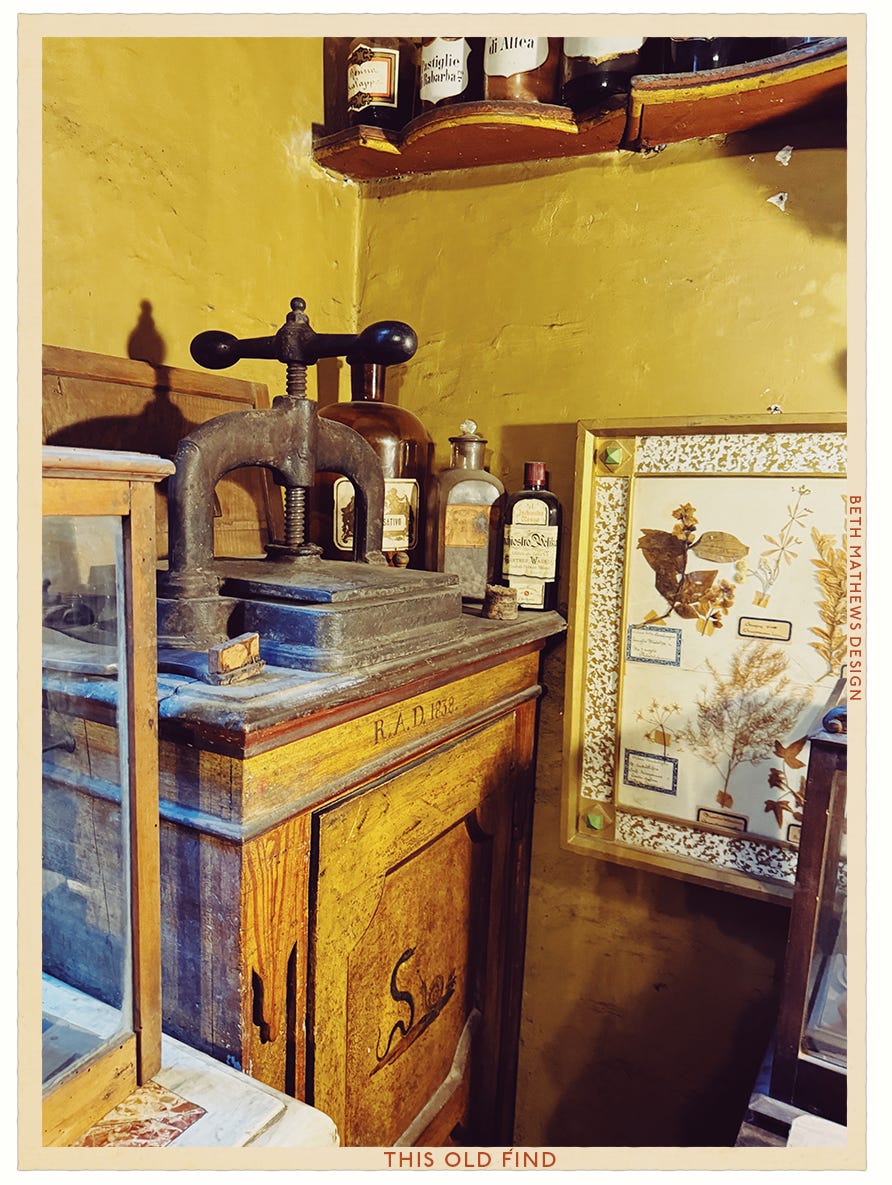
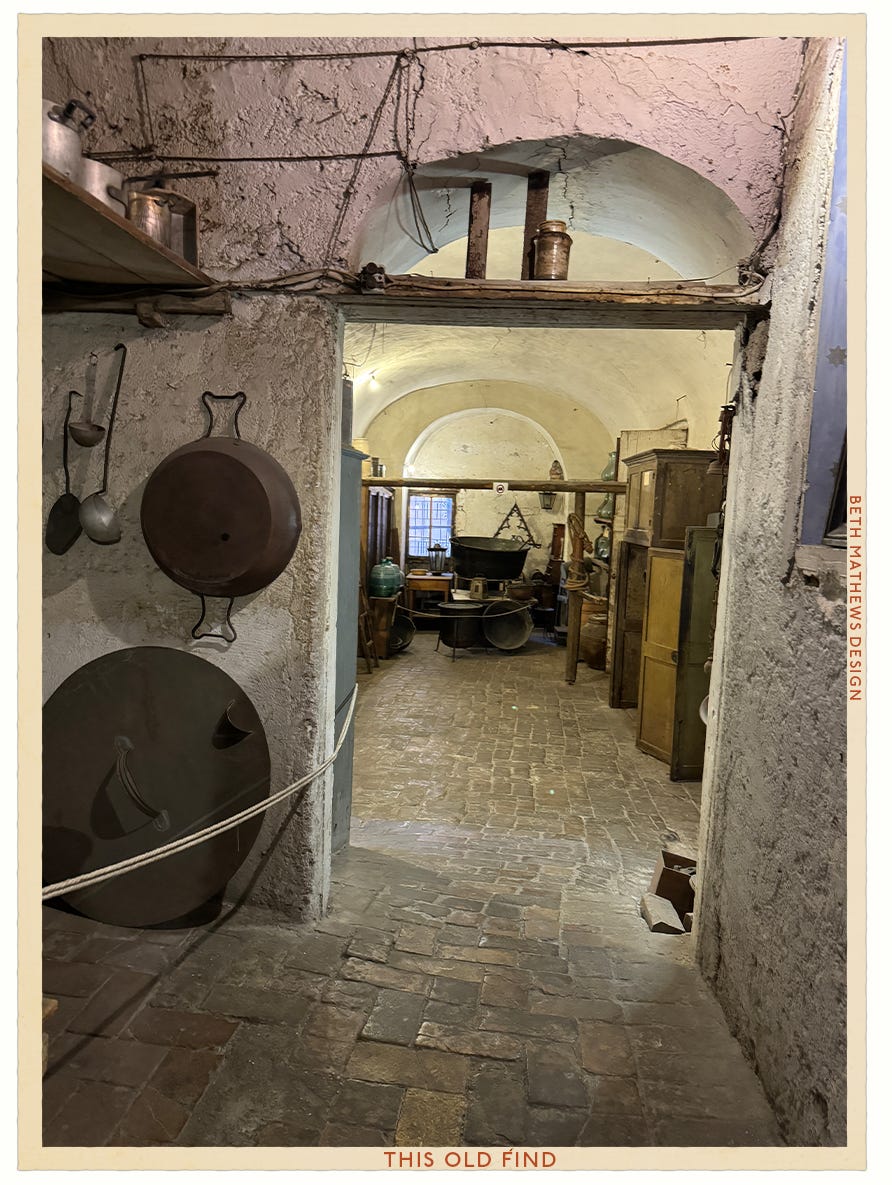
Thanks for touring the oldest pharmacy in Rome with me! If you ever find yourself in Rome, make sure to check it out!
Here’s the email address: anticafarmaciadellascala@gmail.com 🫡
Love,
Beth
Wow! So cool! Thanks for sharing
What a treasure. Forget being a kid in a candy store. This is way better!
I am very grateful that there are organizations and people that see wisdom and value in preserving places like this for future generations. It gives hope that we don’t succumb to societal dementia.